14 Jul 2026
Support Networks and Funding Channels Powering Rapid Choices in Trackside, Sports Pitches, and Virtual Settings
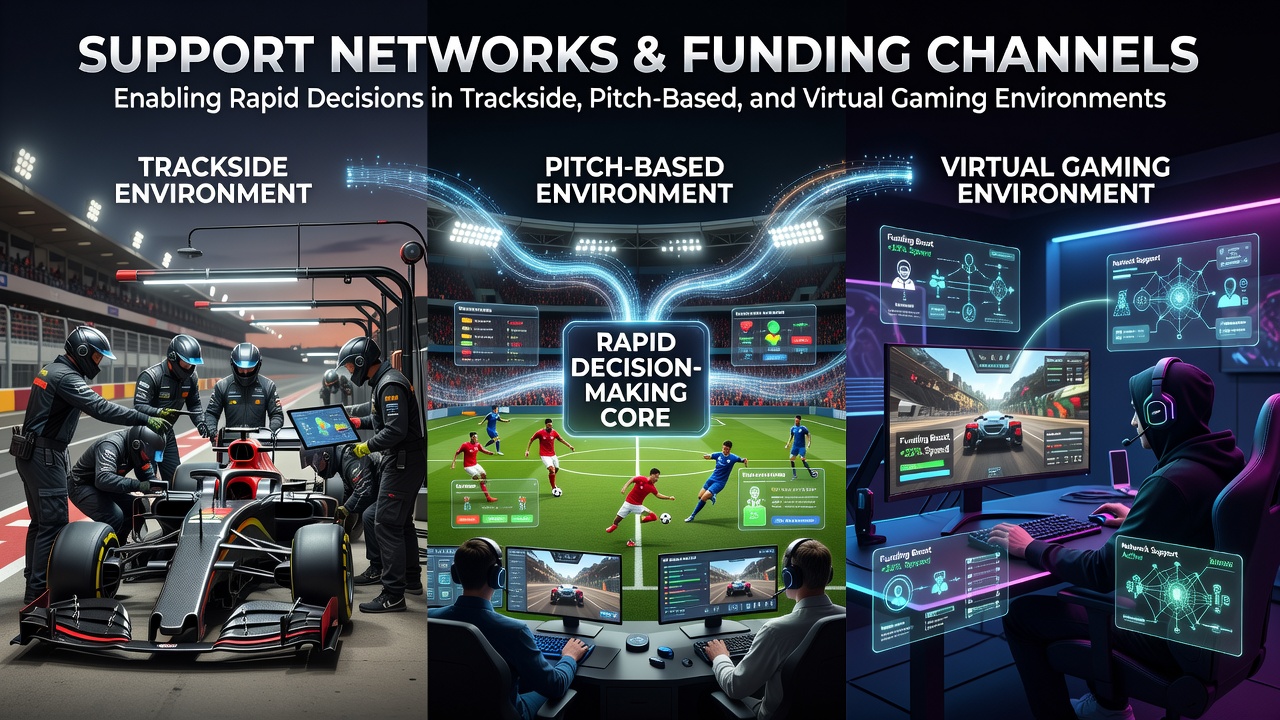
Support networks and funding channels form the backbone that lets officials, coaches, and operators make split-second calls across trackside venues, pitch-based competitions, and virtual gaming platforms, and data from industry reports shows these systems have expanded steadily through 2025 into July 2026.
Trackside Operations and Real-Time Coordination
Trackside environments such as motorsport circuits and horse racing facilities rely on integrated communication grids that connect stewards, timing crews, and safety teams, while dedicated funding streams from equipment suppliers and venue operators keep these grids updated with low-latency sensors and cloud-linked dashboards. Observers note that when a vehicle incident occurs on a circuit the network routes video feeds and sensor data to multiple decision points simultaneously, allowing race control to issue flags or safety-car orders without delay. Research from the European Automobile Manufacturers Association indicates that circuits investing in fiber-optic backbones and redundant satellite links reduced average response intervals by measurable margins between 2023 and 2025.
Funding often arrives through public-private partnerships that cover both hardware upgrades and staff training programs, and these arrangements have grown more common as venues seek to meet insurance and regulatory standards for rapid incident handling. One motorsport series in North America documented how annual grants from automotive partners supported deployment of wearable biometric monitors on marshals, feeding live health metrics into the central command system during events.
Pitch-Based Sports and Instant Replay Infrastructure
Pitch-based disciplines like soccer, rugby, and field hockey use layered support networks that combine on-field officials with remote video review centers, and capital channeled through league-wide technology funds has accelerated adoption of automated offside detection and goal-line systems. Figures released by the International Football Association Board reveal that more than sixty professional leagues worldwide had implemented semi-automated tools by mid-2026, each relying on continuous data streams from multiple camera arrays and edge-computing nodes. These setups demand stable funding to maintain server capacity and calibrate equipment between matches, because any interruption in the review pipeline can halt play for extended periods.
Coaching benches also benefit when clubs allocate portions of sponsorship revenue to portable tablets linked directly to the same data feeds, enabling tactical adjustments within seconds of a stoppage. Studies conducted at universities in Australia and Canada have tracked how such integrated channels shorten the interval between an event on the pitch and the coach's subsequent instruction to players, with measurable effects on substitution timing and formation changes during high-stakes fixtures.
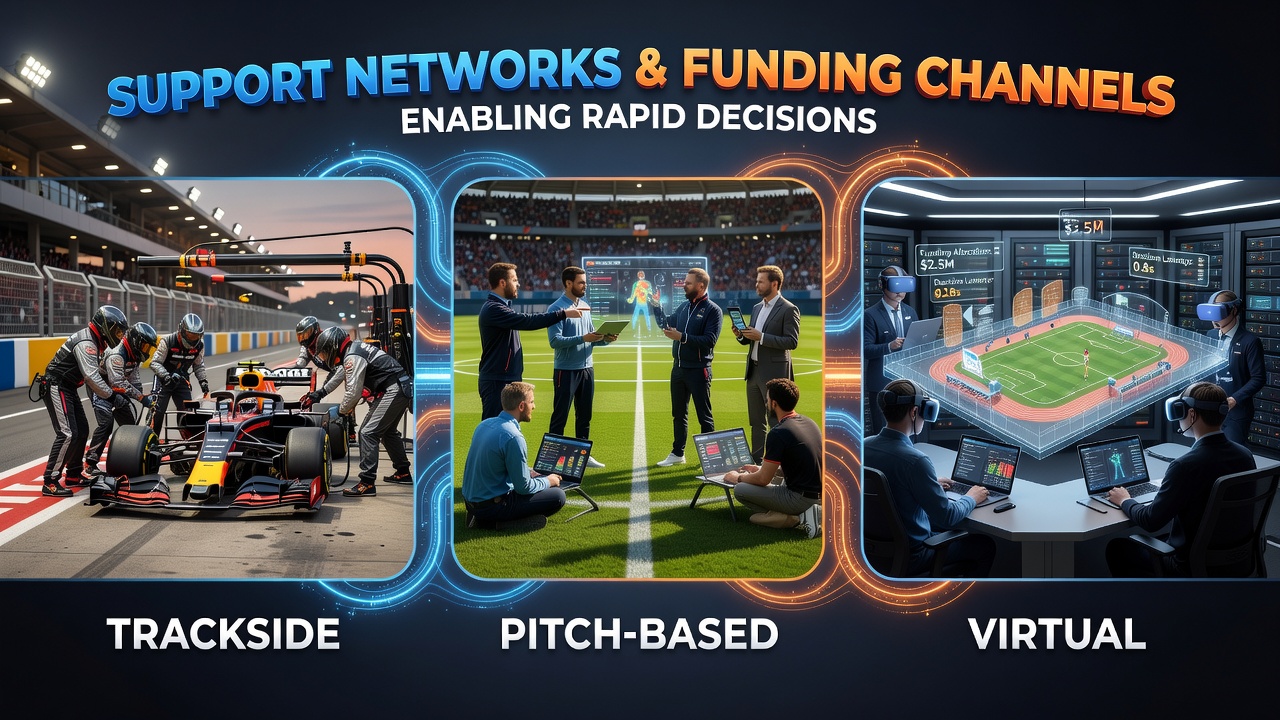
Virtual Gaming Platforms and Scalable Backend Systems
Virtual gaming environments operate on server clusters and content-delivery networks that must process thousands of simultaneous player actions, and dedicated investment vehicles from both venture funds and platform operators keep these clusters resilient during peak load periods. Data compiled by the Entertainment Software Association shows North American and European studios directing increasing portions of development budgets toward distributed support teams that monitor latency, detect anomalies, and push hotfixes in real time. When a virtual tournament experiences sudden traffic spikes the network automatically reallocates resources, while on-call engineers receive alerts through integrated ticketing systems funded under multi-year service agreements.
Regional esports leagues in Asia and South America have formed consortiums that pool subscription fees and broadcast rights income to underwrite these technical layers, ensuring that match officials can review disputed plays through synchronized replays without waiting for manual uploads. Academic papers published in 2025 by research groups at technical institutes in Germany and Japan documented how such pooled resources cut average dispute-resolution times by nearly half compared with earlier tournament formats that lacked centralized funding commitments.
Cross-Environment Funding Patterns and July 2026 Developments
Across all three settings a recurring pattern appears in which initial capital outlays for hardware give way to recurring operational budgets that cover software licenses, staff certification, and periodic stress testing, and analysts tracking these expenditures note that venues and leagues increasingly treat the entire support stack as a single line item rather than separate technology purchases. In July 2026 several circuits and leagues announced renewed multi-year contracts with cloud providers that include service-level guarantees for sub-second data propagation, reflecting the maturation of earlier pilot programs started in 2022 and 2023.
Grant programs administered by national sports ministries in Canada and the Netherlands have also begun requiring applicants to demonstrate how requested funds will integrate with existing decision-support networks, thereby steering investment toward scalable rather than isolated solutions. Trade associations representing both traditional sports and digital entertainment sectors have published joint white papers outlining recommended procurement timelines that align hardware refresh cycles with funding disbursement schedules, reducing the risk of capability gaps during critical competition windows.
Conclusion
The interplay between robust support networks and sustained funding channels continues to shape how quickly decisions can be reached in trackside, pitch-based, and virtual environments, and ongoing infrastructure projects scheduled through the remainder of 2026 indicate that these linkages will grow tighter as sensor density and data volumes increase. Organizations that maintain diversified financing sources and redundant technical pathways position themselves to handle the accelerating pace of events across physical and digital domains alike.